
STEM Lores
The stories behind the videos
The written story behind every Math Lore, Physics Lore and Chemistry Lore video: the people, the dates, the ideas.
Math Lore
Visit Math Lore →π, e, i, √2, 0! and ∞ — the numbers that shaped mathematics and the people who found them. Visual proofs, real history, one idea per screen.
 6 min readWhy Are Primes the Atoms of Numbers? From Euclid's Proof to RSA EncryptionEvery whole number is built from primes in exactly one way. That fact is 2,300 years old, and it still guards the padlock in your browser.
 5 min readWhat Is the Square Root of −1 Really? Imaginary Numbers as a Quarter TurnMultiplying by minus one is a half turn. What happens twice to make that? A quarter turn, and a second dimension for the line to turn into.
 5 min readThe Basel Problem: How Euler Found π²/6 in the Sum of 1/n²There is no circle anywhere in the question, yet the answer is π² over 6. It took ninety years, a 28-year-old and a sine wave treated as an infinite polynomial.
 5 min readAre Some Infinities Bigger Than Others? Cantor's Diagonal Argument ExplainedHow do you compare two endless collections without counting them? Georg Cantor's answer led him to a shocking result, and to a paradise Hilbert refused to leave.
 3 min readBraess's Paradox: How a New Road Can Make Every Driver SlowerA free shortcut opens, every driver makes the sensible choice, and every trip gets 15 minutes longer. The arithmetic fits on a napkin.
 6 min readWhy Is 0! = 1? Zero Factorial Is Not Just a ConventionZero factorial looks like a rule someone made up to keep the algebra tidy. Four separate routes, from counting to calculus, arrive at the same 1.
 3 min readThe Monty Hall Problem: Why Switching Doors Wins Twice as OftenOne prize, three doors and a host who knows where the prize is. Count the cases and switching wins two times out of three.
 3 min readThe Rope Around the Earth Puzzle: Why 1 Extra Meter Lifts It 16 cmA rope hugs the equator. Add one meter, lift it evenly all the way round, and a mouse can walk under it. The size of the Earth never enters the answer.
 3 min readThe Mutilated Chessboard Problem: Why 31 Dominoes Can't Cover 62 SquaresThe area matches exactly. The colors do not. A puzzle from a 1946 logic textbook shows how the right way of looking beats any amount of trial and error.
 6 min readWhy Is e = 2.718…? How Compound Interest Found the Number of GrowthNobody chose the number 2.718281828…; let growth feed on itself and it answers, in banks, in atoms, in luck and in a circle.
 3 min readHow Many Ways Can 4 Letters All Go in the Wrong Envelopes? The Story of DerangementsMost people guess the chance is below one third. Count the shuffles and every letter goes wrong more often than that, with e hiding in the answer.
 3 min readCompound Interest and the Number e: Why Your Balance Stops Near 2.718Split one year's interest into ever smaller payments and the money does not explode. It creeps up toward a single number, and Jacob Bernoulli found it first.
 6 min readWhat Is Pi, Really? Why π Is the Unit of Turning, Not Just 3.14Circumference over diameter is where π starts, not what it is. Follow it from Archimedes' polygons to half a turn, and to a sphere where the ratio fails.
 3 min readWhy the Square Root of 2 Broke the Pythagoreans: The Diagonal That Ended a ReligionA square with sides of 1 has a diagonal that no ratio of whole numbers can measure. That fact cut straight through a brotherhood that believed all is number.
 3 min readWhy Doubling Beats Everything: Exponential Growth, Folded Paper and a ChessboardA sheet one tenth of a millimeter thick, doubled 42 times, ends up farther away than the Moon. Here is why doubling leaves steady adding behind.
 7 min readWhy Is the Square Root of 2 Irrational? The Number That Broke MathematicsA square's diagonal cannot be measured by any fraction. Here is the short proof, the legend it grew, and the question it left open until 1872.
Physics Lore
Visit Physics Lore →How we found out how fast light travels, why the sky is blue and that the universe is expanding — one number, one measurement, one experiment at a time.
 3 min readSolvay 1927: Why the Nobel Count Includes the FutureA photograph fixes the participants, but its Nobel tally includes later awards. Max Born and Marie Curie reveal exactly what is being counted.
 2 min readClocks Go Back: Does the SI Second Change?Britain’s clock change alters the displayed time. The atomic definition explains why the duration of a second stays the same.
 3 min readTycho Brahe's Metal Nose: What the Evidence Really ShowsA duel, a missing prosthesis and traces of copper and zinc: separating what happened to Tycho Brahe’s nose from what tradition added.
 2 min readMaxwell, Light and the Evidence in Electrical MeasurementsAn electrical experiment did not time light. Maxwell’s theory revealed why its result could nevertheless point to light’s electromagnetic nature.
 2 min readIs a Waterfall Warmer at the Bottom? James Joule's Answer (and His Honeymoon)A brewer turned a paddle wheel, warmed a barrel of water and changed physics. Then, the story goes, he took a thermometer on honeymoon.
 2 min readWho Is the Youngest Nobel Laureate in Physics? Lawrence Bragg, at 25He had the idea on a walk by the river, won the prize at 25, and shared it with his father. A century later both records still stand.
 2 min readDid Einstein Win the Nobel Prize for Relativity? No. Here's What It Was ForSearch the citation for the word relativity and it is not there. What is there is a short law about light knocking electrons out of metal.
 2 min readLise Meitner: Nominated for a Nobel Prize 49 Times, and She Never WonMax Planck put her name forward seven times. Niels Bohr did too, and so did Otto Hahn. The archive keeps every one of the 49 nominations, and none of them succeeded.
 6 min readRutherford's Gold Foil Experiment: How Bouncing Alpha Particles Revealed the NucleusIn 1909 two men in Manchester counted flashes in the dark. About one alpha particle in eight thousand came back, and the picture of the atom had to change.
 3 min readThe Bohr Model: Why Electrons Only Take Certain StepsClassical physics said atoms should not last. In 1913 Niels Bohr answered with a rule nobody could yet explain: the electron lives on steps, never between them.
 6 min readWhere Does E=mc² Come From? Einstein's Three-Page Paper of 1905The most famous equation in physics is not written in the paper that discovered it. What Einstein wrote was a sentence, and a thought experiment with two flashes of light.
 6 min readThe Ice Telescope That Won the 2026 Nobel Prize in Physics: Halzen and IceCubeA particle invented on paper in 1930, a dinner table on Christmas Eve and 5,160 sensors in the ice: how Francis Halzen turned Antarctica into a telescope.
 2 min readA Telescope Buried in Ice: IceCube and the 2026 Nobel Prize in PhysicsSixty-five billion neutrinos pass through your fingernail every second. IceCube, a cubic kilometre of Antarctic ice, catches the rare one that leaves a flash.
 6 min readWhy Isn't the Sky Violet? Rayleigh Scattering, Tyndall's Tube and the Human EyeThe physics of scattering favours violet over blue. The sky is blue anyway. The answer took a glass tube, an argument from dimensions and a close look at the eye.
 6 min readWhat Did Einstein Win the Nobel Prize For? The Photoelectric Effect, Not RelativityThe most famous Nobel Prize in physics names a law about light striking metal. The man who confirmed it called the idea behind it reckless.
 3 min readThe Cavendish Experiment: How Henry Cavendish Weighed the Earth From a Shed in 1798Two small lead balls, two big ones, a wire that barely twisted and a man watching through the wall. The answer was about 1% off.
 2 min readWithout Einstein, Your GPS Would Drift 10 km a Day: Relativity in Your PocketTwo of Einstein's effects pull the satellite clocks in opposite directions. The bigger one wins by 38 microseconds a day, and your map has to know it.
 6 min readWhy Does 137 Haunt Physics? The Strange Story of the Fine-Structure ConstantA pure number with no units sets how strongly light grips matter. We have measured it to twelve digits, and nobody can say why it is 1/137.
 2 min readWhy Feynman Told Physicists to Hang 137 on the WallIn 1985 Richard Feynman picked out one number for physicists to worry about. More than forty years on, it is measured to twelve digits and still unexplained.
Chemistry Lore
Visit Chemistry Lore →The Element Files: who found each element, what it does to us, where it hides in your life and the strangest thing it ever did — from hydrogen to the end of the periodic table.
 5 min readThe Periodic Table: How Chemistry Found Its Hidden OrderAn empty space became a prediction. Understanding why takes us from the workshop to the inside of an atom.
 2 min readCalcium: Your Body’s Most Abundant Metallic Element Is Not MetalCalcium belongs among the metals, but its place in the body is as ions: incorporated in mineral or dissolved for signalling.
 3 min readWhy Bananas Are Slightly RadioactiveA tiny radioactive fraction of naturally occurring potassium explains the banana fact; careful counting keeps it in perspective.
 2 min readWhy Argon Usually Refuses to React — but Can Form a CompoundArgon usually remains separate and unreactive, but a laboratory compound shows why inert should never mean impossible to react.
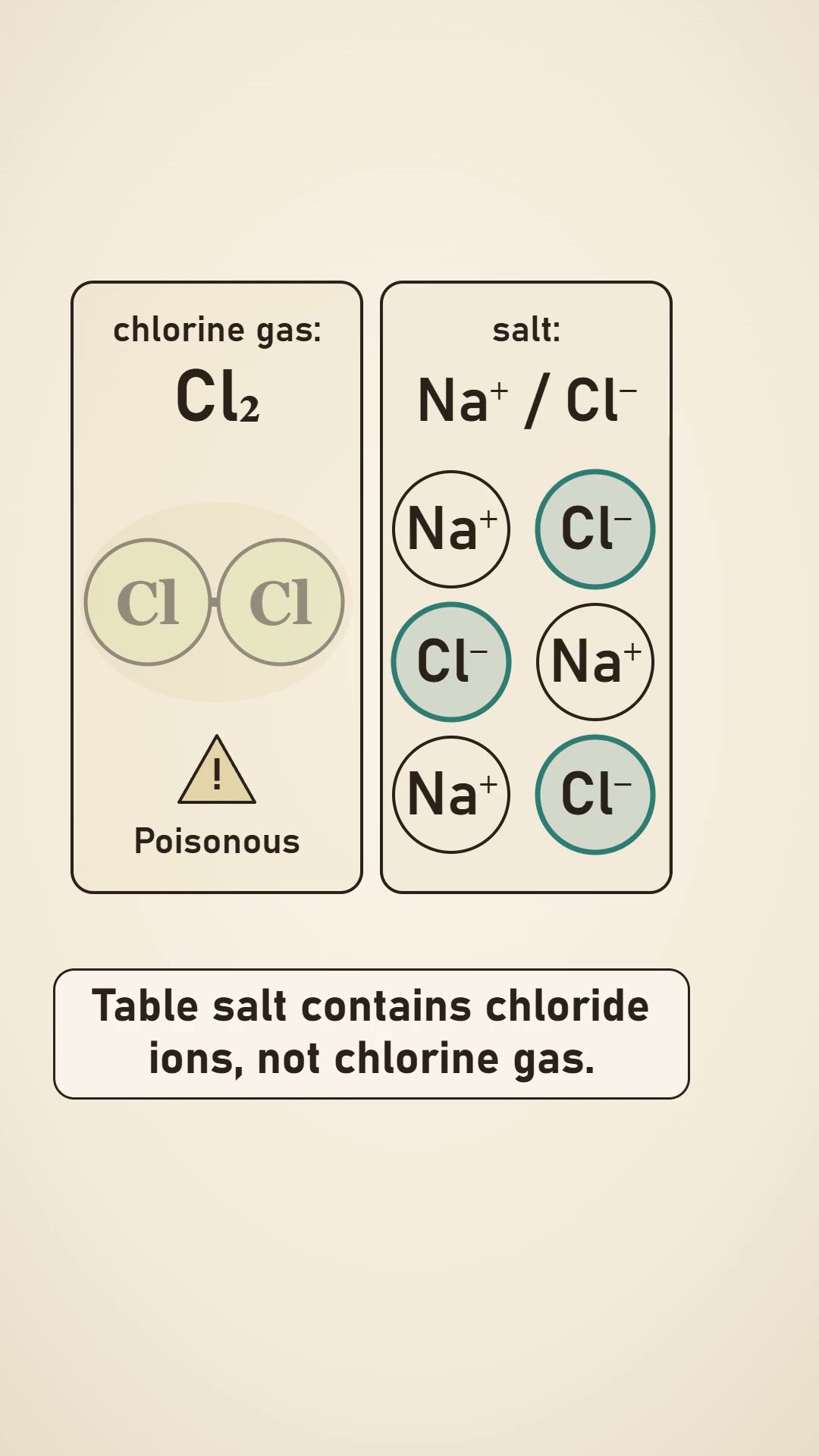 2 min readChlorine and Chloride: Why Table Salt Is Not Chlorine GasA pool and a salt crystal share chlorine atoms, not a chemical identity.
 2 min readWhy Some Volcanic Fumes Smell Like Rotten EggsThe yellow mineral and the smelly gases share an element, not an identity.
 2 min readA New Form of Boron, Imma-B60: The Brittle Element That Now BendsBoron is hard, dark and brittle, and new forms of it have been almost impossible to find. This one is full of holes, carries current and gives instead of breaking.
 2 min readWhat Is the James Webb Telescope's Mirror Made Of? Beryllium, Not GoldWebb's honeycomb mirror looks like solid gold. Underneath it is a grey metal named after the mineral that emerald is made of.
 2 min readLithium, the Lightest Metal: Why It Floats on OilA metal you can cut with a knife and that bobs on oil like a cork. Element 3 is so light that the usual way of storing its relatives does not work.
 6 min readCarbon, Element 6: Why Diamond, Pencil Graphite and You Are the Same ElementThe hardest natural material and the soft grey core of a pencil are the same atoms, arranged two different ways. So, in a sense, are you.
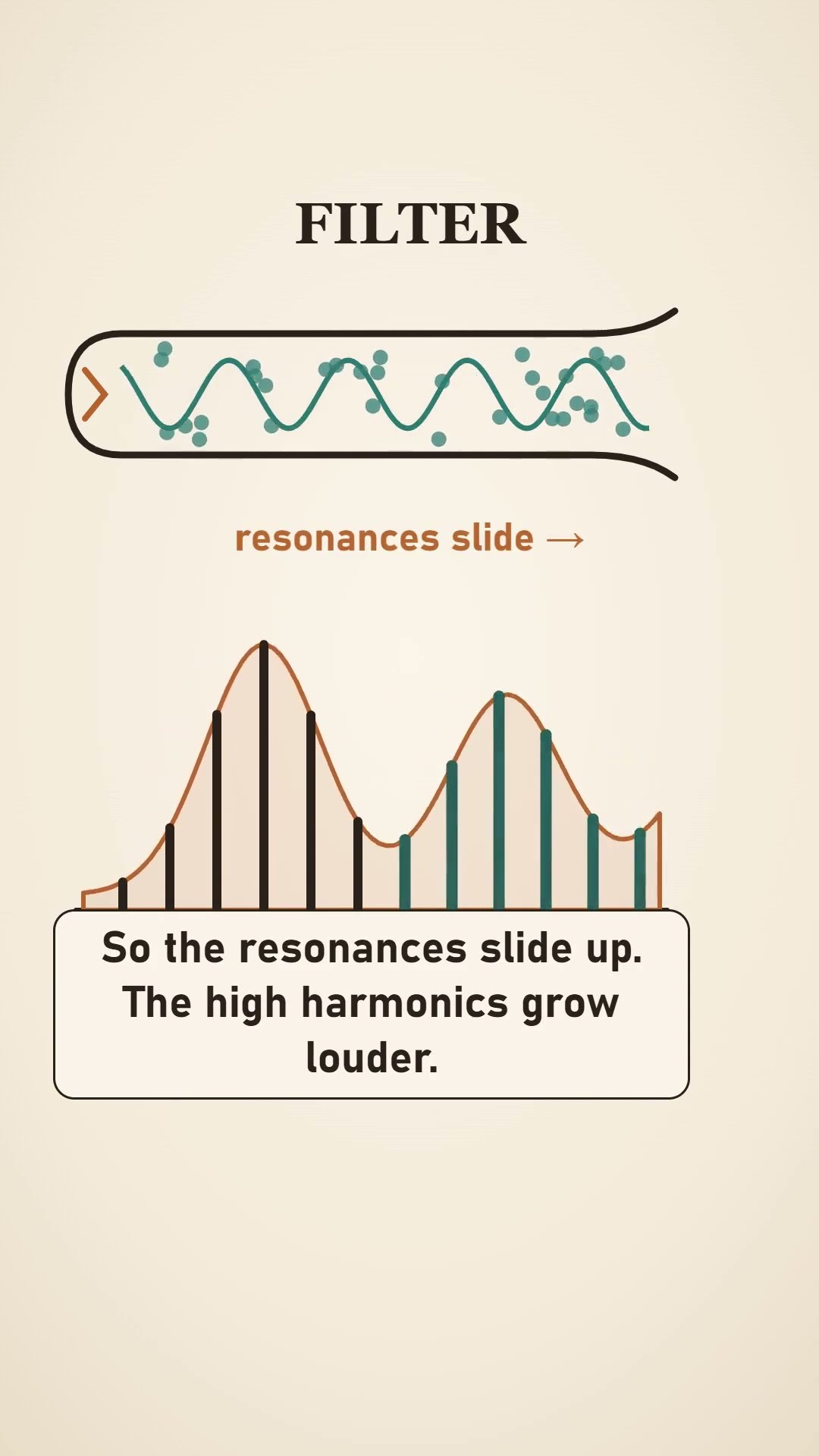 2 min readDoes Helium Change Your Voice's Pitch? What Helium Really DoesThe squeaky helium voice is real, but the note never changes. What changes is the shape of the sound, and the reason is the speed of sound in the gas inside you.
 7 min readMirror Molecules and the 2026 Nobel Prize in Chemistry: Why Life Picked One HandPasteur's tweezers, a physicist's three conditions and a reaction that copies itself: how chemistry finally learned to choose a hand, and what the 2026 prize is for.
 6 min readWho Discovered Oxygen? Scheele, Priestley, Lavoisier and the Fall of PhlogistonA Swedish apothecary, an English minister and a French tax collector all found the same gas. Only one name usually makes the textbook.
 3 min readWhy Is Life One-Handed? The 2026 Chemistry Nobel for Kagan and SoaiYour hands are mirror images, and so are many molecules. The 2026 prize rewards the chemists who found how a reaction can choose a side, as life did.
 6 min readHydrogen, Element 1: From Cavendish’s Inflammable Air to the Stars and the HindenburgThe simplest atom there is came first in the universe, lights every star, and once filled the largest airship ever to cross the Atlantic.
 6 min readWhy Is Gold Yellow? How Einstein’s Relativity Gives Gold Its ColourElement 79 owes its colour, and its refusal to tarnish, to electrons moving at more than half the speed of light.
 3 min readWhat Is Petrichor? The Chemistry Behind the Smell of RainStone, the blood of the gods and a family of soil bacteria: the earthy smell after a shower has a name, a molecule and a delivery system.
 2 min readHow Much Gold Has Ever Been Mined? All of It Fits in One 22-Metre CubeEvery ring, coin, bar and crown ever made would fit in a block shorter than a tennis court. The reason is density.
